
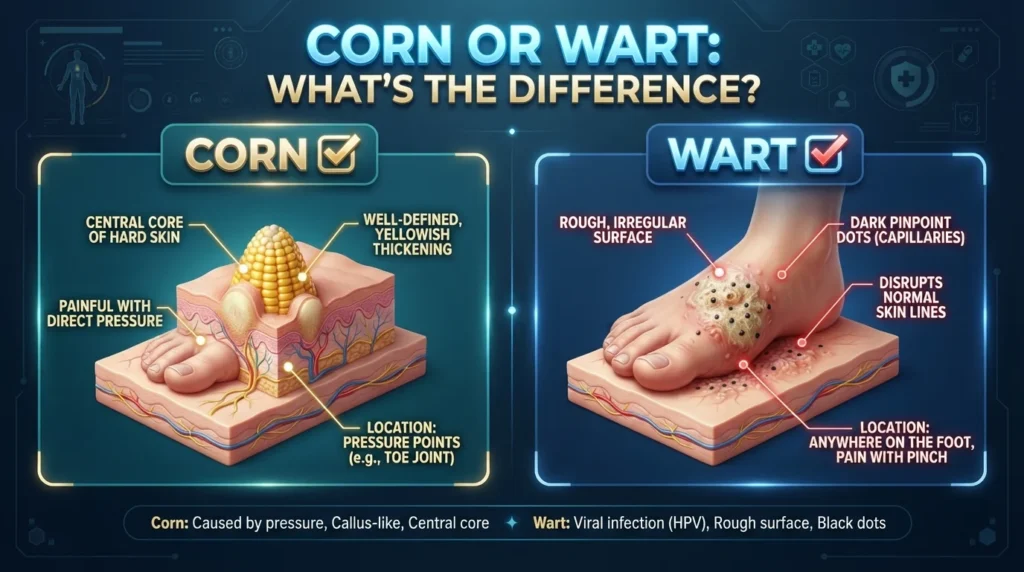

Quick Ans: Corn and wart are not the same thing. A corn is a thickened area of skin caused by repeated pressure or friction, while a wart is a skin growth caused by the human papillomavirus (HPV). Although they can look similar, their causes, symptoms, and treatments are different.
If you’ve noticed a small, rough bump on your foot or hand, you may wonder whether it’s a corn or wart. Since both conditions can appear on the feet and may cause discomfort while walking, many people confuse one with the other.
Knowing the difference is important because each condition requires a different approach. Treating a wart like corn or a corn like a wart can delay healing and sometimes make the problem worse.
In this comprehensive guide, you’ll learn the key differences between corn and wart, their symptoms, causes, diagnosis, treatment options, prevention tips, and the easiest ways to identify each one at home.
Corn vs. Wart: Which One Do You Have?
Although they may appear similar, corns and warts develop for completely different reasons.
| Feature | Corn | Wart |
|---|---|---|
| Cause | Pressure or friction | Human papillomavirus (HPV) |
| Contagious | ❌ No | ✅ Yes |
| Usually Painful | Pressure causes pain | Can be painful, especially on feet |
| Skin Lines | Continue through the corn | Often interrupted |
| Black Dots | ❌ Usually absent | ✅ Often present (tiny clotted blood vessels) |
| Common Location | Toes, soles, sides of feet | Feet, hands, fingers, knees |
| Treatment | Reduce pressure and remove thick skin | Wart treatments or medical removal |
Both conditions can affect daily life, but understanding the cause is the first step toward choosing the right treatment.
What Is a Corn?
A corn is a small, thick, hardened area of skin that forms because of repeated friction or pressure.
Corns develop as the body’s natural way of protecting the skin from continuous rubbing. They commonly appear on the feet because of tight shoes, high heels, walking patterns, or foot deformities.
Unlike warts, corns are not caused by a virus and cannot spread from one person to another.
Common Symptoms of a Corn
A corn may have the following characteristics:
- Thick, hardened skin
- Round or cone-shaped appearance
- Tenderness when direct pressure is applied
- Dry or waxy texture
- Usually develops over bony areas
People often notice corns on the tops of the toes, between the toes, or on the soles of the feet.
What Is a Wart?
A wart is a harmless skin growth caused by infection with certain types of the human papillomavirus (HPV).
The virus enters the skin through tiny cuts or cracks and causes extra skin cells to grow, creating a raised bump.
Unlike corns, warts are contagious and may spread through direct skin contact or contaminated surfaces such as locker room floors, public showers, and swimming pool areas.
Common Symptoms of a Wart
A wart may include:
- Rough or grainy surface
- Tiny black dots inside the lesion
- Interrupted skin lines
- Small raised bump
- Pain when walking if located on the sole of the foot
Plantar warts, which develop on the bottom of the feet, often grow inward because of body weight.
What Causes Corns?
Several factors increase the risk of developing corns.
Tight Shoes
Shoes that squeeze the toes create constant friction.
High Heels
High heels increase pressure on the front of the foot.
Walking Barefoot
Walking without shoes increases friction against rough surfaces.
Foot Deformities
Conditions like bunions or hammertoes can create pressure points.
Repetitive Activities
Running, hiking, or standing for long periods may contribute to corn formation.
What Causes Warts?
Warts develop after infection with HPV.
Common risk factors include:
- Walking barefoot in public showers
- Sharing towels or footwear
- Small cuts in the skin
- Weakened immune system
- Frequent skin-to-skin contact with infected areas
Not everyone exposed to HPV develops warts because immune responses differ from person to person.
How to Tell the Difference Between a Corn and a Wart
Here are some simple ways to distinguish them.
Look at the Skin Lines
A corn usually allows normal skin lines to continue across it.
A wart often interrupts the natural skin pattern.
Check for Black Dots
Tiny black dots are commonly seen in warts. These are small clotted blood vessels.
Corns usually do not contain these dots.
Press on the Area
A corn often hurts when direct pressure is applied.
A plantar wart may hurt more when squeezed from the sides.
Consider the Cause
If the area developed after wearing tight shoes or repeated rubbing, it is more likely a corn.
If it appeared without obvious friction and has a rough surface with black dots, it may be a wart.
Can a Corn Turn Into a Wart?
No.
A corn cannot turn into a wart.
Likewise, a wart cannot become a corn.
Although they may appear similar, they are completely different conditions with different causes.
Treatment for Corns
Treatment focuses on removing pressure and reducing thick skin.
Common approaches include:
- Wearing properly fitted shoes
- Using protective pads
- Moisturizing dry skin
- Carefully reducing thickened skin
- Addressing foot deformities if needed
People with diabetes or poor circulation should avoid cutting corns themselves and seek medical advice.
Treatment for Warts
Many warts disappear on their own, but treatment may speed recovery.
Options include:
- Salicylic acid preparations
- Cryotherapy (freezing)
- Prescription treatments
- Minor medical procedures for persistent cases
Because warts are contagious, avoid picking at them and keep them covered if necessary.
How to Prevent Corns
You can lower your risk by:
- Wearing comfortable shoes
- Choosing socks that fit well
- Using protective cushions
- Keeping feet moisturized
- Reducing repetitive pressure
How to Prevent Warts
Reduce your chances of getting warts by:
- Wearing sandals in public showers
- Avoiding direct contact with existing warts
- Not sharing shoes or towels
- Keeping feet clean and dry
- Covering cuts or scrapes
Common Myths About Corns and Warts
Myth 1: Every Hard Lump Is a Wart
False.
Many hard lumps are actually corns or calluses.
Myth 2: Corns Are Contagious
False.
Corns result from friction, not infection.
Myth 3: All Warts Need Immediate Removal
False.
Some warts disappear naturally over time, although treatment may be helpful.
Myth 4: Corns and Warts Are the Same
False.
They have different causes, appearances, and treatments.
Frequently Asked Questions
Is a corn the same as a wart?
No. A corn is caused by pressure or friction, while a wart is caused by HPV.
Are warts contagious?
Yes. Certain types of HPV can spread through direct or indirect contact.
Can a corn go away on its own?
It often improves once the source of pressure or friction is removed.
How do I know if I have a plantar wart?
A plantar wart often has tiny black dots, interrupts skin lines, and may hurt when squeezed from the sides.
Should I see a doctor?
You should seek medical advice if the growth is very painful, changes rapidly, bleeds easily, becomes infected, or if you have diabetes, poor circulation, or a weakened immune system.
Conclusion
When comparing corn or wart, the biggest difference is the cause. A corn develops because of repeated pressure or friction, while a wart is caused by the human papillomavirus (HPV). Paying attention to skin lines, black dots, pain patterns, and the location of the growth can help you tell them apart. If you’re unsure or the lesion is persistent or painful, consult a qualified healthcare professional for an accurate diagnosis and appropriate treatment.