
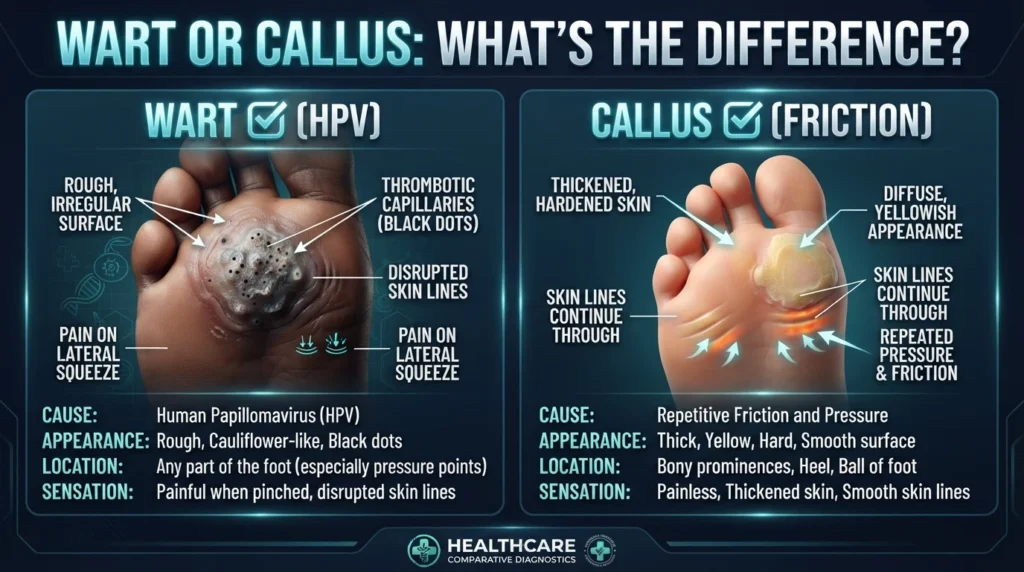

Quick Ans: Warts and calluses may look similar, but they are completely different skin conditions. A wart is caused by the human papillomavirus (HPV), while a callus develops because of repeated friction or pressure on the skin.
If you’ve noticed a rough patch of skin on your hands or feet, you might wonder whether it’s a wart or callus. Since both conditions can appear as thickened areas of skin, they’re often confused with one another. However, knowing the difference is important because they have different causes, symptoms, and treatments.
In this complete guide, you’ll learn the differences between wart vs. callus, how to identify each one, their causes, symptoms, treatment options, prevention tips, and when you should see a healthcare professional. By the end of this article, you’ll be able to confidently tell whether you’re dealing with a wart or a callus.
Wart vs. Callus: Which One Is It?
Although both warts and calluses can appear on the feet or hands, they are not the same condition.
A wart is a viral skin infection caused by the human papillomavirus (HPV). It develops when the virus enters the skin through tiny cuts or cracks.
A callus, on the other hand, is a thickened layer of skin that forms naturally to protect your body from repeated pressure or friction.
| Condition | Cause | Contagious | Pain | Appearance |
|---|---|---|---|---|
| Wart | Human papillomavirus (HPV) | ✅ Yes | Often painful when squeezed | Rough surface with tiny black dots |
| Callus | Repeated friction or pressure | ❌ No | Usually painful when pressed directly | Thick, hard, smooth yellowish skin |
What Is a Wart?
A wart is a small, rough growth that appears on the skin after infection with certain types of HPV. The virus causes skin cells to grow faster than normal, creating a raised bump.
Warts can develop almost anywhere on the body but are most common on:
- Feet
- Hands
- Fingers
- Knees
- Elbows
Some people develop only one wart, while others may have several.
Common Symptoms of a Wart
People with warts often notice:
- A rough or grainy surface
- Tiny black dots (clotted blood vessels)
- Small raised bumps
- Pain when squeezed from the sides
- Interrupted skin lines
Not every wart looks the same. Plantar warts on the feet can become flattened because of body weight, while common warts usually grow outward.
What Is a Callus?
A callus is an area of thickened skin that forms naturally when your body tries to protect itself against repeated rubbing or pressure.
Unlike a wart, a callus is not caused by a virus and cannot spread to another person.
Calluses most commonly appear on:
- Soles of the feet
- Heels
- Toes
- Palms
- Fingers
People who spend long hours standing, walking, running, or lifting tools often develop calluses.
Common Symptoms of a Callus
Typical signs include:
- Thickened skin
- Hard or rough texture
- Yellowish appearance
- Smooth surface
- Mild discomfort when direct pressure is applied
Calluses usually become less noticeable after reducing the source of friction.
What Causes Warts?
The main cause of a wart is infection with the human papillomavirus (HPV).
The virus enters through tiny cuts in the skin and causes abnormal skin growth.
Common risk factors include:
- Walking barefoot in public showers
- Swimming pools
- Locker rooms
- Sharing towels
- Skin injuries
- Weakened immune system
Because HPV is contagious, touching a wart or contaminated surfaces may spread the virus.
What Causes Calluses?
Calluses develop because your skin protects itself from repeated stress.
Common causes include:
- Wearing tight shoes
- Poorly fitting footwear
- Walking barefoot
- Running frequently
- Using hand tools
- Playing musical instruments
- Repeated sports activities
Unlike warts, calluses are not infectious.
Wart or Callus: How to Tell the Difference
Sometimes it’s difficult to identify the condition simply by looking at it.
Here are the easiest ways to tell them apart.
1. Look for Tiny Black Dots
Tiny black dots are one of the strongest signs of a wart.
These dots are tiny blood vessels.
Calluses do not have black dots.
2. Check the Skin Lines
A callus usually keeps the natural lines of your skin.
A wart interrupts those lines because the virus changes skin growth.
3. Press the Area
Pain can help identify the condition.
- Warts usually hurt when squeezed from the sides.
- Calluses usually hurt when direct pressure is applied from above.
4. Think About the Cause
Ask yourself:
- Have you been wearing tight shoes?
- Have you been running long distances?
- Do you frequently use tools?
If yes, a callus is more likely.
If the growth appeared without obvious friction, it may be a wart.
5. Consider Whether It Is Spreading
Warts may multiply over time because HPV can spread.
Calluses generally stay limited to areas exposed to pressure.
Treatment for Warts
Many warts disappear on their own, but treatment can speed recovery.
Common treatment options include:
- Salicylic acid
- Cryotherapy (freezing)
- Prescription creams
- Laser treatment
- Minor surgical removal
Avoid cutting or picking at a wart because this may spread the virus.
Treatment for Calluses
Most calluses improve once the source of friction is removed.
Treatment may include:
- Comfortable footwear
- Protective padding
- Moisturizing creams
- Gentle exfoliation
- Pumice stone use
- Orthotic shoe inserts
Never attempt to cut a callus with sharp objects, especially if you have diabetes.
How to Prevent Warts
Reducing exposure to HPV lowers your risk.
Helpful prevention tips include:
- Wear flip-flops in public showers.
- Avoid sharing shoes or towels.
- Keep feet clean and dry.
- Cover existing warts.
- Wash hands after touching a wart.
How to Prevent Calluses
Simple lifestyle changes can prevent calluses from developing.
You can:
- Wear properly fitted shoes.
- Use cushioned insoles.
- Wear protective gloves.
- Moisturize your feet regularly.
- Replace worn-out footwear.
These habits reduce friction and help keep your skin healthy.
Common Mistakes People Make
Many people assume every rough bump on the foot is a wart.
Others think every thick patch of skin is a callus.
Mistakes like these may delay proper treatment.
If the condition becomes painful, spreads, bleeds, or doesn’t improve after several weeks, it’s best to seek medical advice.
Quick Comparison
| Feature | Wart | Callus |
| Cause | HPV infection | Friction and pressure |
| Contagious | ✅ Yes | ❌ No |
| Black dots | ✅ Usually | ❌ No |
| Skin lines | Interrupted | Preserved |
| Surface | Rough | Thick and smooth |
| Treatment | Antiviral or wart removal | Reduce pressure and friction |
Remember: If you see black dots and interrupted skin lines, it’s more likely a wart. If the skin is simply thick because of repeated pressure, it’s probably a callus.
Frequently Asked Questions
Is a wart the same as a callus?
No. A wart is caused by HPV, while a callus forms because of repeated friction or pressure.
Can a callus turn into a wart?
No. A callus cannot become a wart because they have different causes.
Are warts contagious?
Yes. Warts can spread through direct or indirect contact with HPV.
Do calluses spread to other people?
No. Calluses are not contagious.
Can I remove a callus at home?
Mild calluses can often be managed with moisturizing, reducing friction, and gentle exfoliation. Never cut a callus yourself with sharp tools.
When should I see a doctor?
Seek medical advice if the growth is very painful, bleeds, spreads rapidly, becomes infected, or if you have diabetes or poor circulation.
Conclusion
Understanding the difference between a wart or callus can help you choose the right treatment and avoid unnecessary discomfort. A wart is a viral skin growth caused by HPV and may spread to other areas or people, while a callus is your body’s natural response to repeated friction or pressure. Looking for signs such as tiny black dots, changes in skin lines, and the location of pain can make identification much easier. If you’re ever unsure or the condition worsens, consulting a healthcare professional is the safest choice.